

As mentioned in our previous blog, the extreme tides of the Bay of Fundy produces several fascinating and unusual features along the coastline. Just up the coast from the Fundy Parkway, Hopewell Rocks provincial park provides an opportunity to see the effects of thousands of years of erosion at both high and low tides. This is the only park we know that allows for two-day admission so visitors may view the rocks at both low and high water levels as the tides don’t always rise and fall in accordance with park open hours. We were lucky, we caught both on the same day.

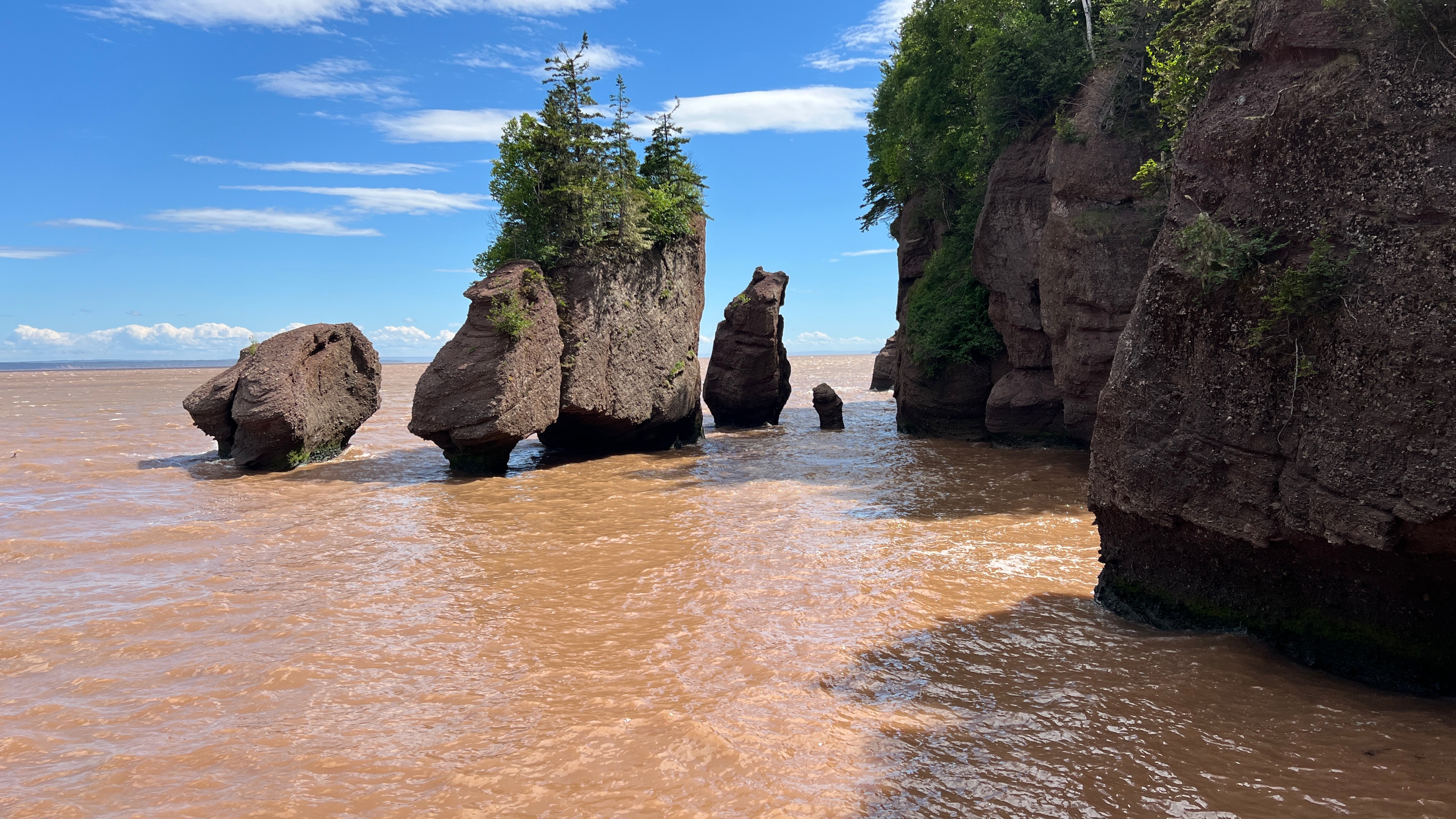
Below is a video by the New Brunswick Provincial Parks showing the fast rising tide.
Twice a day, when the tide is out, visitors are able to walk on the ocean floor and view the Rocks from ground level. When doing so, it’s impossible to avoid the slimy red mud covering the area so it’s best to come prepared for mud-caked boots. Even though the Park provides wash stations back up top, our boots still show signs of our visit weeks later: Messy, messy, messy! But for good reason, the bay’s vast sediment plains support a wide variety of biological life.

Various shorebirds are often seen flocking to feed along the coastline, including generations of sandpipers that feed on the mud shrimp on their way to and from South America. It turns out the Bay of Fundy is the halfway point in their journey and they have been known to double in size before moving on. Having been mesmerized by hundreds of tree swallows moving in unison at the Jersey Shore, we know how special it must be for locals to observe these unique visitors. We hope to have an opportunity to see them ourselves one day.

Another awe-inspiring phenomenon courtesy of the Fundy Bay, is the tidal bore. Again, we lucked out in terms of timing.
The Bay of Fundy tides that eroded and formed the Hopewell Rocks are the same waters that flow up the Petitcodiac River and cause the Tidal Bore phenomenon twice a day. In this case, the tides push more than 100 billion tons of water up the Petitcodiac River. We took advantage of the viewing platform provided by the city of Moncton, NB and fortunately had arrived plenty early as the tidal bore came 20 minutes prior to the estimated time.
Thank heavens we waited to eat lunch until after we saw the tidal bore!
Thank you for following along.

Leave a Reply