
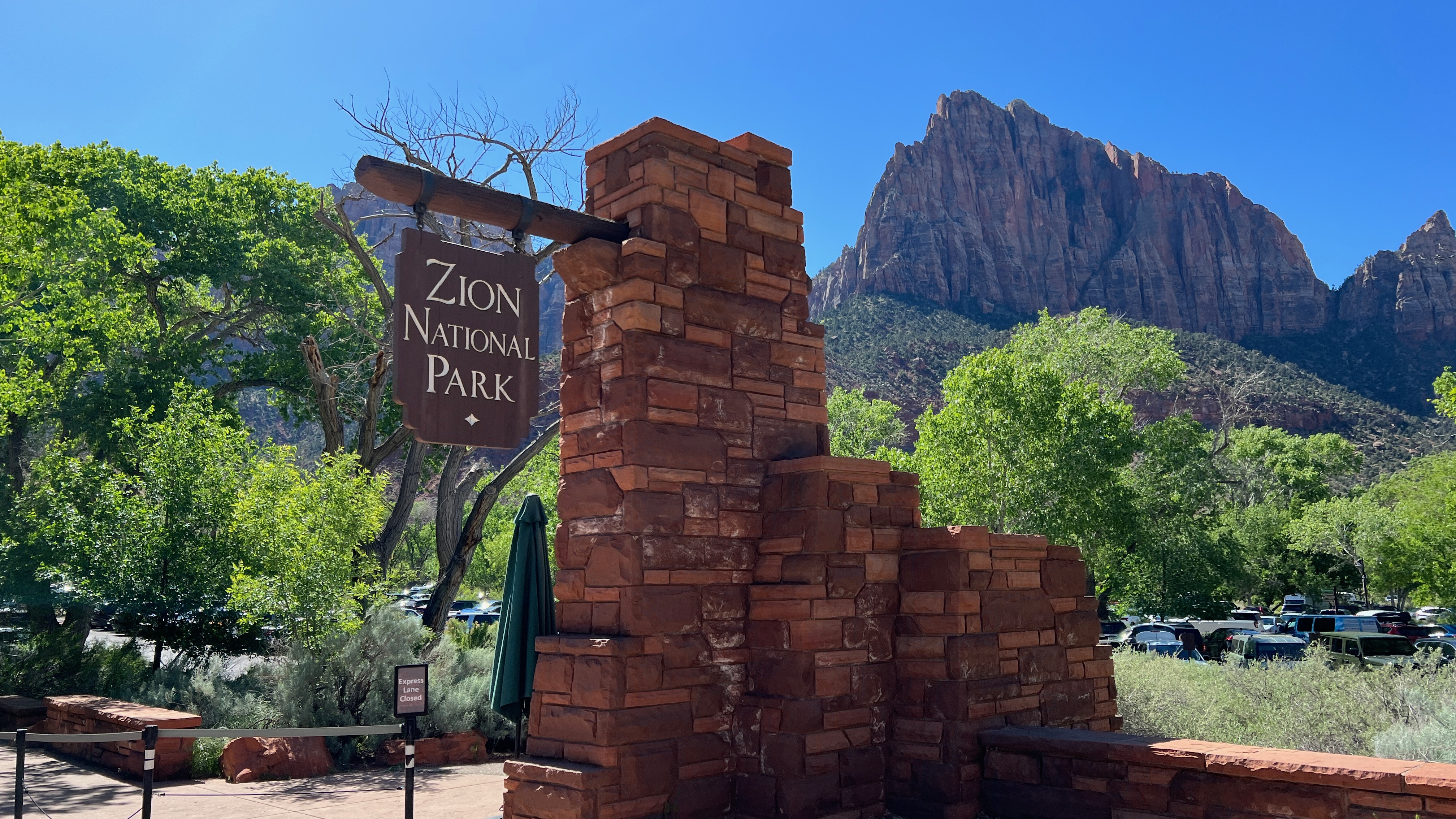
First established in 1909 as Mukuntuweap National Monument, the Monument was renamed Zion in 1909 by the Acting Director of the newly established National Park Service due to concerns that the original Native American name would deter visitors who might have difficulty pronouncing its name. Zion National Monument became a National Park on November 19, 1919.
Mukuntuweap, Zion’s original name, can be translated as “straight canyon” which aptly describes Zion’s near vertical canyon walls.

Visiting Zion National Park was a novel experience for us. Unlike most NPs, which permit visitors to drive and park their vehicles throughout the park, Zion does not permit any vehicular traffic on the main scenic route. The only way to visit the 10 spots along the “scenic drive” is by Zion Park operated buses. While we understand that the popularity of this park was wreaking havoc on the natural resources, without timed entry, this can mean a long wait for the bus at certain times of the year.

Zion Canyon was formed both by erosion by the Virgin River that cuts through the park and rainfall on the canyon walls. At the time of our visit, the river was running at a very high rate due to recent snow melt (the region experienced record amounts of snow). The river was overflowing its banks, hiding the channel and dislodging trees along its bank.

Because the canyon walls are so steep many of the hikes are moderate to strenuous. Hiking shoes and walking sticks are advised. We were surprised at the number of people who started their visit in very white sneakers! The trails up the canyon walls are rocky and slippery but lead to stunning views. All of the walking required in this park resulted in 20,000+ step days.


We stayed in the town of Springdale, Utah, at the Main (South) entrance to the Park. The town is small but offers numerous places to stay, eat and shop. We enjoyed some wonderful dishes.

There is a free shuttle that runs to and from the town to the park entrance. We recommend taking the shuttle unless you plan to arrive at the park before 8AM as the parking lots fill up quickly in the park. If you visit, plan for a minimum stay of two days.
We camped in the Zion Canyon Campground and RV resort located a half-mile from the park entrance so we could walk to the park. Our site had a great view of the canyon walls. If you camp at this RV park try to get a site near the Virgin River, as the sites are a generous size and the sound of the river is peaceful and relaxing.

As we were leaving, we took the main road east through the park, which included driving through the 1930 historic, one-mile tunnel. We were surprised to find the landscape very different once we were through the tunnel and on the eastern side of the park.


This is the last National Park for this trip. We will be heading to Flagstaff via Kanab and then turning back to the east. Thanks for stopping by.
Leave a Reply