
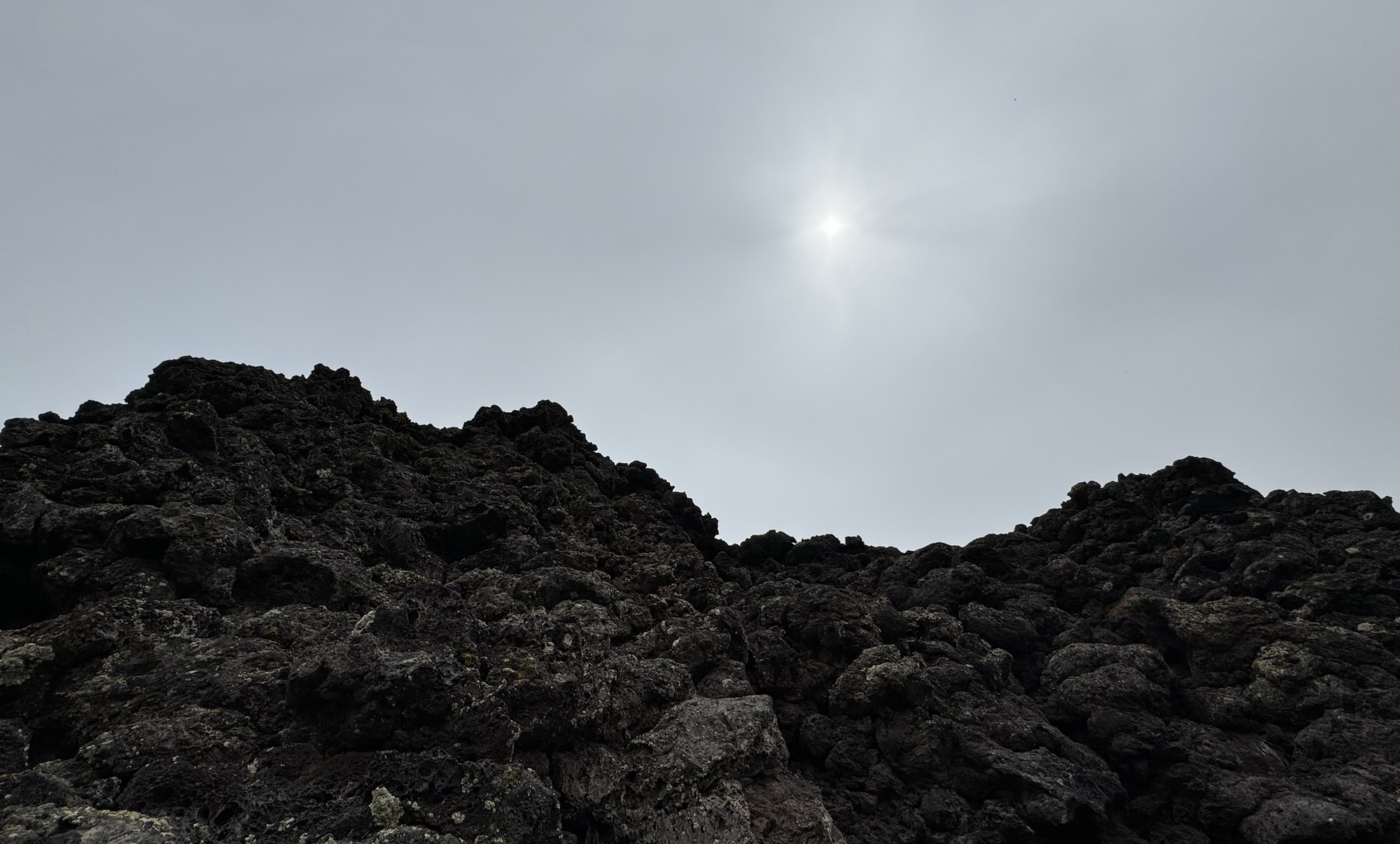
Located in central Idaho are the remnants of three lava fields that cover 400 square miles of land. Unlike better known stratovolcanos, which are large and conical in shape, the volcanic cones in Craters of the Moon are caused by fissure eruptions that occur at cracks in the earth’s crust and result in volcanic cones that are relatively small.

The park contains two types of volcanic cones, spatter and cinder. Spatter cones are formed when large chunks of lava are ejected and fall back to earth close to the vent port. The lava chunks are large and “weld” together as they land.


Cinder cones are the most common form of a volcano. Cinder cones are formed by the explosion of small chunks of volcanic material. Unlike splatter cones, these small chunks cool and remain loose stones.


The lava flows at Craters of the Moon range between 15,000 and 2,000 years old. The volcanos are considered dormant, not inactive. Based on past eruptive events, geologists estimate that over one cubic mile (4.2 cubic km.) of lava will be erupted during the next event!
One interesting lava formation is a tree mold. These formations result when living trees are incinerated by lava flow.

Visiting Craters of the Moon can easily be done by car. There is a 7 mile loop road that takes one close to all the lava tube caves, trails and volcano cones in the park. The closest place to stay is Arco, ID which is about 20 miles away.

The best way to see the park is to camp there. It takes several days to explore all the trails, caves and cones. We spent 3 nights in the campground and did not have time to explore the lava tube caves. The park offers tent and RV campsites with no facilities other than a pit toilet. Camping at Craters of the Moon is a surreal experience. The campsites are surrounded by rugged, rockscaped formations and some desert shrubs. The area is designated as an International Dark Sky Park. If you camp there, you will be rewarded with an amazing view of the night sky.

This was our longest stint of camping without services and we managed well, which is good because we have a week of dry camping planned for the near future. Thanks for checking in.
Leave a Reply