
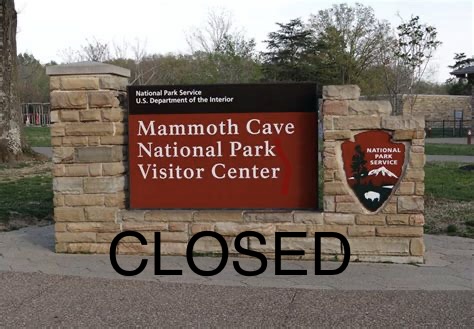
RV travel requires rolling with the punches. During this trip, despite our best laid plans (and having the required reservations), we needed to change course when Mammoth Cave National Park closed due to the federal shutdown. We were so looking forward to visiting the cave – a World Heritage Site and International Biosphere Reserve – but needed to quickly adapt and adjust our travel plans.
So what should we do now?! Not to worry, Sue had an idea as she has had a hankering to visit the International Museum of the Horse in Lexington, KY. In her early twenties, Sue owned a horse and she recently read the novel, Horse, by Geraldine Brooks. The Museum presently houses the skeleton of Lexington, the great nineteenth century thoroughbred racehorse and subject of Ms. Brooks’ novel. What serendipity, lemonade from lemons! So off we drove to Lexington…

The International Museum of the Horse is an equine-lovers dream. The entire world history of the horse and thier importance to human society are laid out in great detail. We appreciated learning about all the ways humans have relied on and benefitted from horses throughout time.

Display depicting horse transport across the ocean. Joe ensuring the horse safely transfers to land.

Kentucky Derby Trophy. Given annually to the winner of the Run for the Roses.

EMA Plaques are an offering in the Shinto tradition of Japan. Imagery appears on the front, (many depict horses), and messages or wishes are written on the back. In some ceremonies, they are ritually burned to liberate the spirit of the offering/wish into the world.

It was fascinating to learn about Japanese culture and learn some Japanese.
In the early 1850s Lexington won six of his seven races, and for 20 years he held the record as the fastest horse in the world. He took part in “The Race Against Time” with a stopwatch as his only “opponent”. Lexington broke the four-mile record and his historic race against time inspired the invention of the chronodometer in 1859, the first mass-produced stopwatch.

The champion thoroughbred remains the greatest stud sire, having sired more than 575 foals, 230 of which won a combined 1,200 races from 1855 – 1880.
The 150-year old skeleton of Lexington has its own interesting history. Six months after Lexington died, his skeleton was exhumed, mounted and donated to the Smithsonian where it was eventually relegated to museum storage. In 1999, the remains were moved to the American History Museum as part of an exhibition featuring the Chronodometer. In 2010, the International Museum of the Horse, a Smithsonian Affiliate, requested the repatriation of Lexington’s bones, which are now on permanent loan to the Museum.


The Museum is part of the Kentucky Horse Park so we also were able to walk through the massive horse barns, visit with the resident horses, and see their impressive harnesses. Truly a fun visit for Sue, who made friends with 2,000 lb. Gus!


Next, we hope to visit Thomas J. Scott’s oil painting, Portrait of Lexington ca. 1857 one display at the Smithsonian in Washington, DC; perhaps this winter while we’re back on the East Coast.

The museum has ample parking for RVs of all sizes.

Leave a Reply